
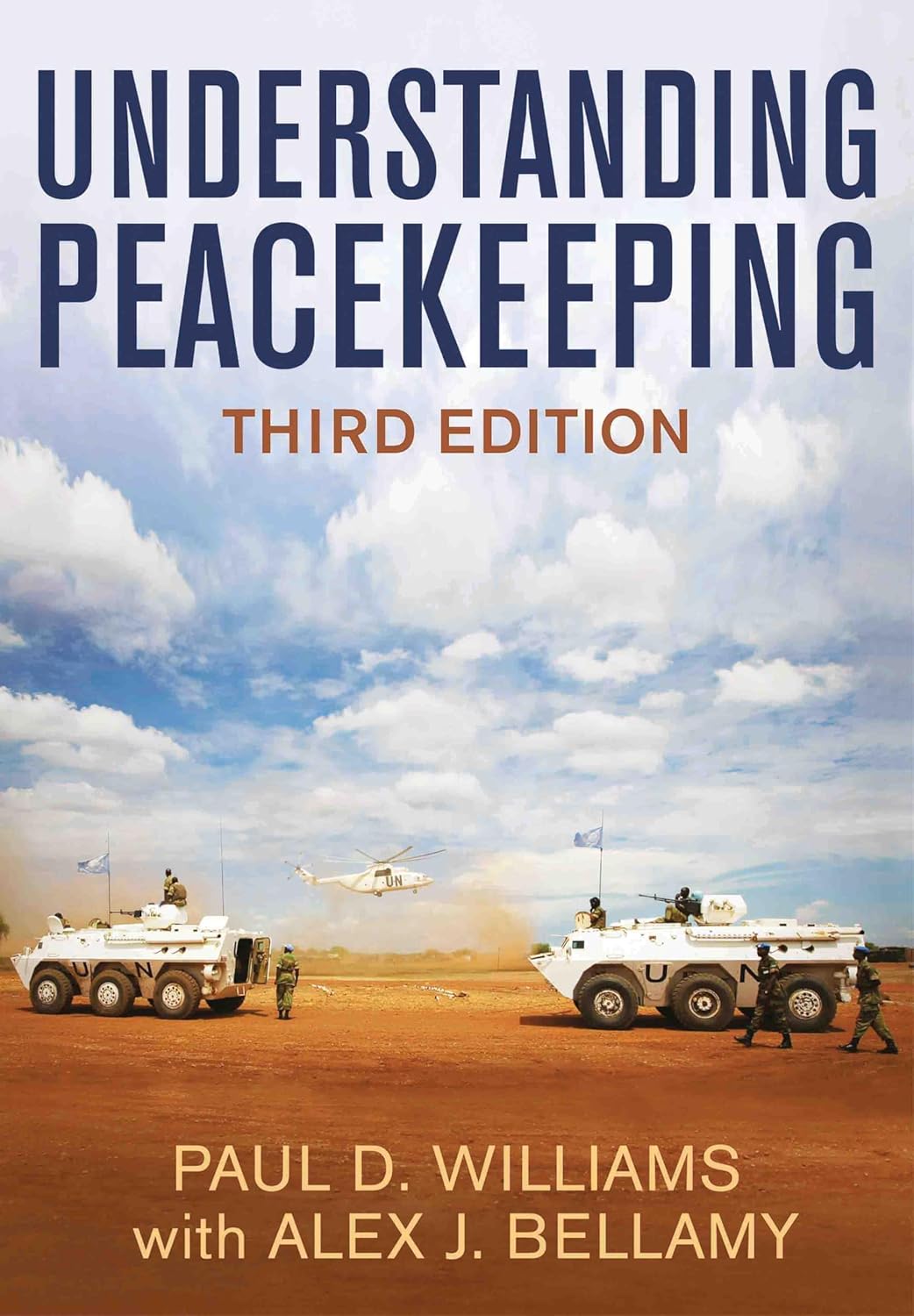

Description
Book Synopsis: Peace operations remain a principal tool for managing armed conflict and protecting civilians. The fully revised, expanded and updated third edition of Understanding Peacekeeping provides a comprehensive and up-to-date introduction to the theory, history, and politics of peace operations. Drawing on a dataset of nearly two hundred historical and contemporary missions, this book evaluates the changing characteristics of the contemporary international environment in which peace operations are deployed, the strategic purposes peace operations are intended to achieve, and the major challenges facing today’s peacekeepers. All the chapters have been revised and updated, and five new chapters have been added – on stabilization, organized crime, exit strategies, force generation, and the use of force.
Part 1 summarizes the central concepts and issues related to peace operations. Part 2 charts the historical development of peacekeeping, from 1945 through to 2020. Part 3 analyses the strategic purposes that United Nations and other peace operations are intended to achieve – namely, prevention, observation, assistance, enforcement, stabilization, and administration. Part 4 looks forward and examines the central challenges facing today’s peacekeepers: force generation, the regionalization and privatization of peace operations, the use of force, civilian protection, gender issues, policing and organized crime, and exit strategies.
Details
Are you interested in global conflict management and protecting civilians? Look no further than Understanding Peacekeeping, the ultimate guide to peace operations. With the fully revised, expanded, and updated third edition, this book offers a comprehensive introduction to the theory, history, and politics of peace operations. By drawing on a dataset of nearly two hundred missions, it provides an in-depth evaluation of the contemporary international environment in which peace operations are deployed.
Want to stay up-to-date with the rapidly changing world of peacekeeping? Understanding Peacekeeping has got you covered. With its five new chapters on topics such as stabilization, organized crime, exit strategies, force generation, and the use of force, this book offers the most current information and analysis available. Each chapter has been meticulously revised and updated to ensure that you have access to the latest insights and developments.
Whether you are a student studying international relations or a practitioner working in the field, Understanding Peacekeeping is an invaluable resource. Part 1 covers the essential concepts and issues related to peace operations, providing you with a solid foundation. Part 2 takes you on a historical journey, tracing the development of peacekeeping from 1945 to 2020. Part 3 explores the strategic purposes of peace operations, including prevention, observation, assistance, enforcement, stabilization, and administration.
However, Understanding Peacekeeping doesn't stop at the past and present. Part 4 takes a forward-looking approach, analyzing the central challenges facing today's peacekeepers. From force generation to the regionalization and privatization of peace operations, from civilian protection to gender issues, this book tackles the most pressing topics in the field. Its comprehensive examination of policing and organized crime, as well as exit strategies, ensures that you are equipped with a well-rounded understanding of contemporary peacekeeping.
Don't miss out on the opportunity to expand your knowledge and contribute to peaceful conflict resolution. Get your copy of Understanding Peacekeeping today and be prepared to make a difference in the world. Visit here to place your order now.
Discover More Best Sellers in Foreign & International Law
Shop Foreign & International Law
Against European Integration: The European Union and its Discontents (Economics in the Real World)
 Foreign & International Law - Against European Integration: The European Union and its Discontents (Economics in the Real World)
 Foreign & International Law - Striking First: Preemption and Prevention in International Conflict (The University Center for Human Values Series, 38)

 Foreign & International Law - The Law of Blockade: As Contained in the Report of Eight Cases Argued and Determined in the High Court of Admiralty On the Blockade of the Coast of Courland, 1854

International, Transnational and Comparative Business Transactions: Connected Ebook (Aspen Casebook)
Foreign & International Law - International, Transnational and Comparative Business Transactions: Connected Ebook (Aspen Casebook)

The Nuremberg Trials: The Nazis and Their Crimes Against Humanity
 Foreign & International Law - The Nuremberg Trials: The Nazis and Their Crimes Against Humanity

Darfur and the Crime of Genocide (Cambridge Studies in Law and Society)
Foreign & International Law - Darfur and the Crime of Genocide (Cambridge Studies in Law and Society)

